Overview
Susquehanna
Juniata
Monongahela
Lehigh
Schuylkill
Conemaugh
Youghiogheny
Conestoga
Allegheny
Lackawanna
Show All Rooms
Show Only Prime Rooms
Show Only Standard Rooms
Bridgeview
The Susquehanna Room

The Bridgeview's Accommodations

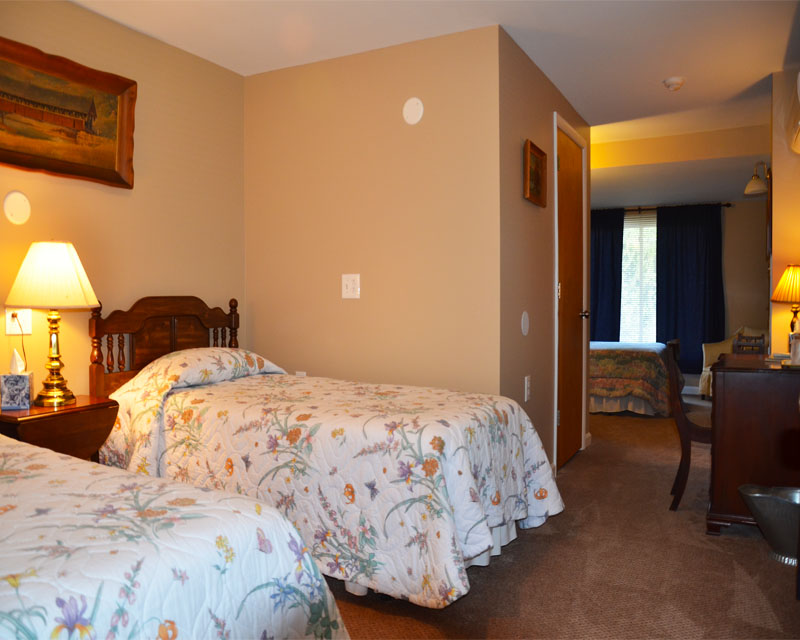
The Bridgeview Bed & Breakfast features ten guest suites, including three outside-entrance rooms, and seven interior traditional rooms one of which is handicap-accessible. The three rooms on the east side of the building are considered Prime rooms (Susquehanna, Juniata, and Monongahela) which are proportionally larger than Standard rooms and feature additional amenities.

All Prime and Standard rooms include individually-controlled central air conditioning, private lavatory and shower, two twin beds, a small desk, and wired as well as wireless Internet connectivity. Rooms at the Bridgeview are named after Pennsylvania's great rivers. For details on any of the rooms and their namesake river, select a room above.

Juniata
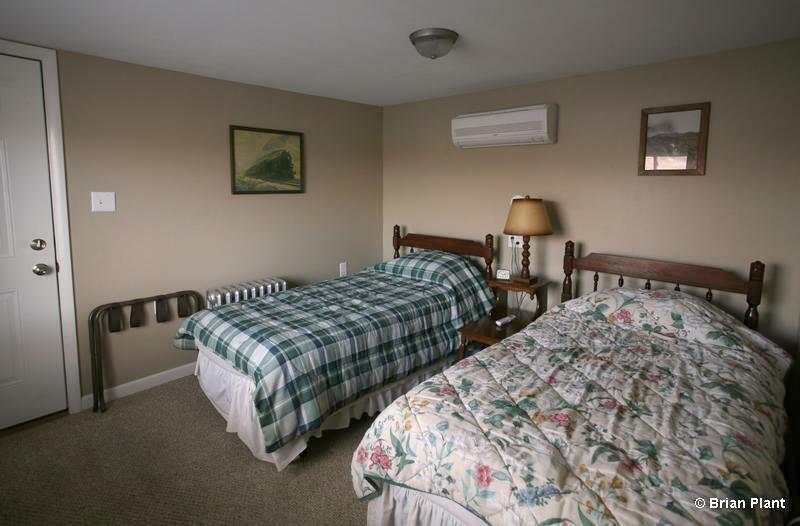
The Juniata Room: The Juniata is typical of Bridgeview accommodations, with two twin beds, a desk, nightstand, and private bath.
The Juniata Room
The Juniata Room: The Juniata is typical of Bridgeview accommodations, with two twin beds, a desk, nightstand, and private bath.

Juniata Room

The Juniata Room is an example standard room configuration at the Bridgeview, with two twin beds, a nightstand, a desk, and a private bath. This room, located on the south side of the building, has a window overlooking the picnic area.


The Juniata River is a tributary of the Susquehanna River, approximately 90 miles long, in central Pennsylvania in the United States. The river is considered particularly scenic along much of its route, having a broad and shallow course passing through several mountain ridges and steeply-lined water gaps. It formed an early 18th-century frontier region in Pennsylvania and was the site of Native American attacks against white settlements during the French and Indian War. The word 'Juniata' is a corruption of the Iroquoian word 'Onayutta,' meaning 'Standing Stone.' There was a large standing stone where the town of Huntingdon now stands. It was reportedly 14.5 feet (4.4 m) tall, with a smoothed side with the history of the local Juniata Tribe. It disappeared in 1754, when the tribe left; legend says they took it with them. [Source: Wikipedia.org]

Monongahela
The Monongahela Room: The Monongahela is typical of Bridgeview accommodations, with two twin beds, a desk, nightstand, and private bath.
The Monongahela Room
The Monongahela Room: The Monongahela is typical of Bridgeview accommodations, with two twin beds, a desk, nightstand, and private bath.

Monongahela Room

The Monongahela Room is a typical room at the Bridgeview, with two twin beds, a nightstand, a desk, and a private bath. This room, located on the south side of the building, has a window overlooking the picnic area.


The Monongahela River (pronounced "ma-NAHN-ga-HEEL-a"), also known locally as the Mon) is a river in North-Central West Virginia and southwest Pennsylvania. At Pittsburgh, it meets the Allegheny River to form the Ohio River. The Monongahela is formed by the confluence of the West Fork River and the Tygart Valley River at Fairmont, West Virginia. The river is navigable its entire length with a series of locks and dams that maintain a minimum depth of 9 feet to accommodate coal-laden barges. In Pennsylvania, the Monongahela is met by two major tributaries: the Cheat River, which joins at Point Marion, and the Youghiogheny River, which joins at McKeesport. [Source: Wikipedia.org]

Lehigh
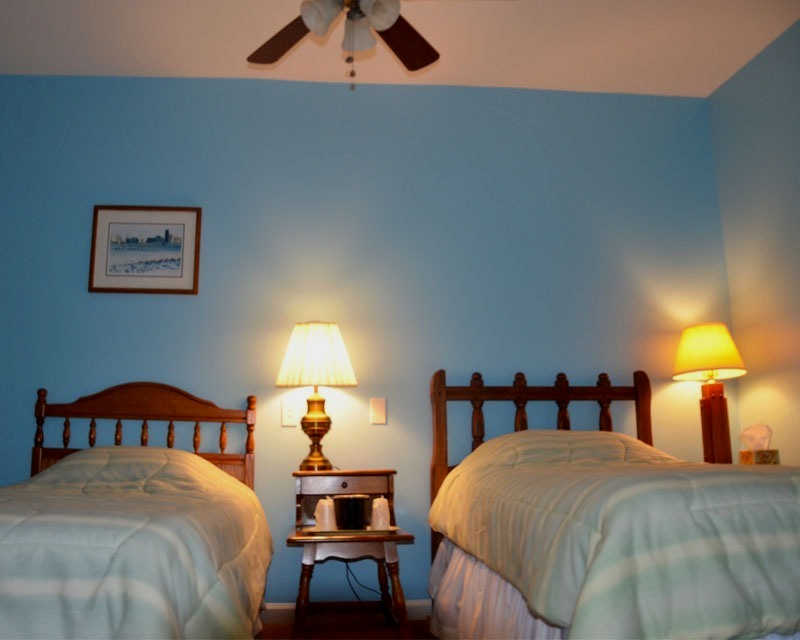
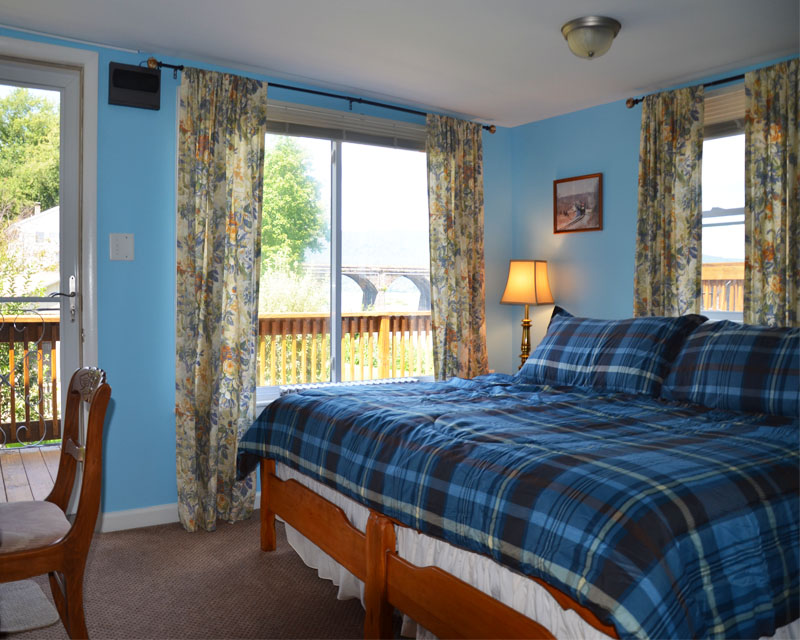
The Lehigh Room: The Lehigh Room, located towards the back (river) porch, illustrates available bed adapters to put the two twin beds together.
The Lehigh Room
The Lehigh Room: The Lehigh Room, located towards the back (river) porch, illustrates available bed adapters to put the two twin beds together.

Lehigh Room

The Lehigh Room is one of two river-facing rooms at the Bridgeview. As is typical of Bridgeview rooms, this room includes two twin beds, a nightstand, a desk, and a private bath.


The Lehigh River, a tributary of the Delaware River, is a 103 mile long river located in eastern Pennsylvania. Part of the Lehigh, along with a number of its tributaries, is designated a Pennsylvania Scenic River by the state's Department of Conservation and Natural Resources. "Lehigh" is an Anglicization of the Lenni Lenape name for the river, "Lechewuekink," meaning "where there are forks." The river flows in a highly winding course through valleys between ridges of the Appalachian Mountains. Its upper course is characterized by numerous whitewater rapids and supports a broad range of recreational pursuits including whitewater rafting, kayaking and canoeing. Its lower course forms the heart of the Lehigh Valley, an historically important anthracite coal and steel-producing region of Pennsylvania. [Source: Wikipedia.org]

Schuylkill
The Schuylkill Room: The Schuylkill, like the other rooms, is named after rivers in the Commonwealth of Pennsylvania. Of course, the Schuykill flows into the Delaware River at Philadelphia.
The Schuylkill Room
The Schuylkill Room: The Schuylkill, like the other rooms, is named after rivers in the Commonwealth of Pennsylvania. Of course, the Schuykill flows into the Delaware River at Philadelphia.

Schuylkill Room

The Schuylkill Room is an interior room at the Bridgeview, equipped with two twin beds, a nightstand, a desk, and a private bath.


The Schuylkill River, most often pronounced "SKOO-kull", is a river in southeast Pennsylvania, and is about 130 miles long. The source of its eastern branch is in the Appalachian Mountains at Tuscarora Springs, near Tamaqua in Schuylkill County. The west branch starts near Minersville and joins the eastern branch at the town of Schuylkill Haven. The Tulpehocken Creek joins it at the western edge of Reading. Wissahickon Creek joins it in northwest Philadelphia. The Schuylkill joins the Delaware River, of which it is the largest tributary, at the site of the former Philadelphia Navy Yard, just northeast of Philadelphia International Airport. [Source: Wikipedia.org]

Conemaugh
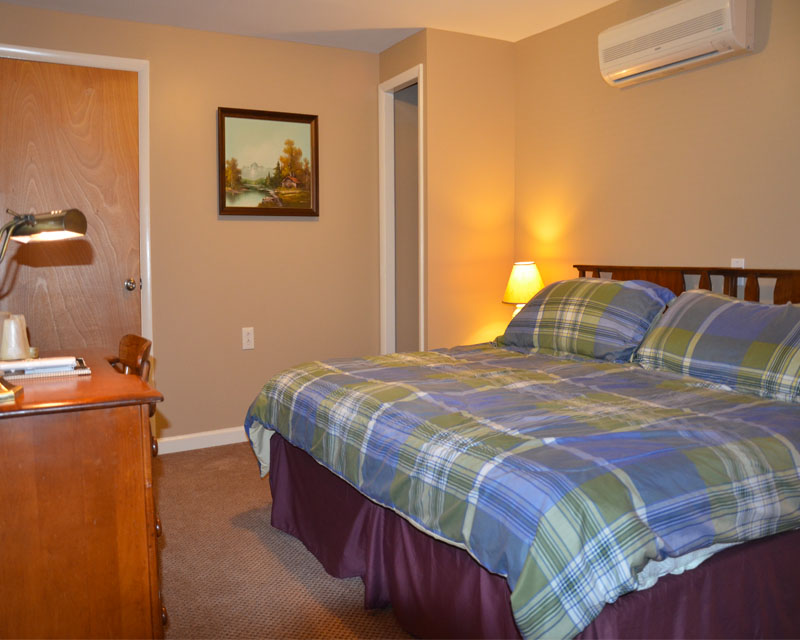
Conemaugh Room: The Conemaugh Room is handicapped-accessible, and features two twin beds and a small desk.
Conemaugh Room
Conemaugh Room: The Conemaugh Room is handicapped-accessible, and features two twin beds and a small desk.

Conemaugh Room

The Conemaugh Room is an interior room at the Bridgeview, equipped with two twin beds, a nightstand, a desk, and a private bath. This room is handicapped-accessible.


The Conemaugh River is a tributary of the Kiskiminetas River, approximately 70 mi long, in western Pennsylvania. It is formed at Johnstown in southwestern Cambria County by the confluence of the Little Conemaugh and Stoneycreek rivers. It flows in a winding course through the mountains along the northern edge of Laurel Hill and Chestnut Ridge. Northwest of Blairsville it is joined by Blacklick Creek. At Saltsburg it is joined from the south by the Loyalhanna River to form the Kiskiminetas. The Kiskiminetas-Conemaugh river basin flows through a scenic mountainous country that forms the heart of the historic coal-producing areas of western Pennsylvania. [Source: Wikipedia.org]


Youghiogheny
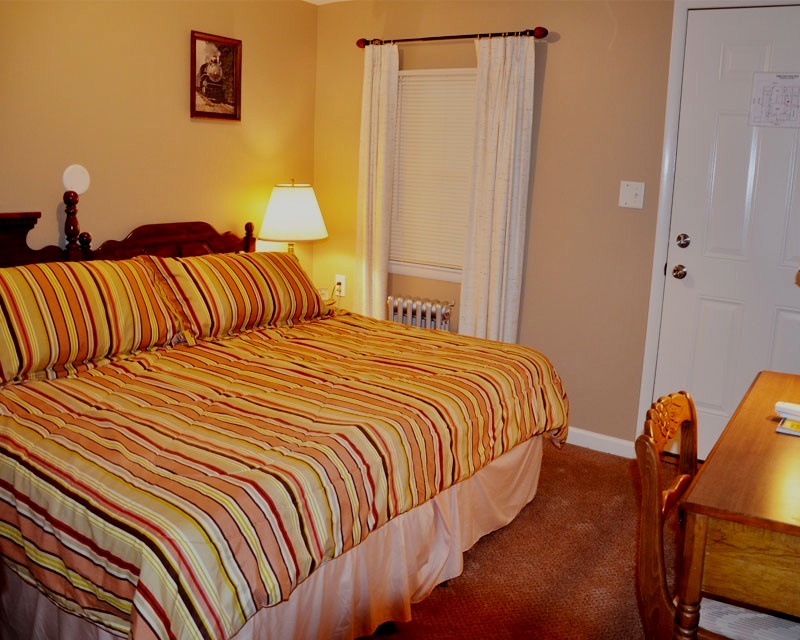
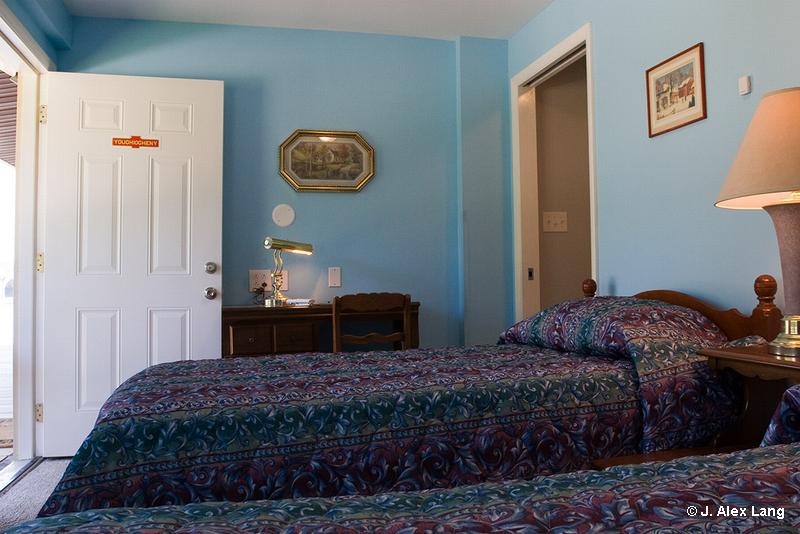
Youghiogheny Room: One of the three exterior-access rooms at the Bridgeview, the Youghiogheny Room features a twin and a double bed.
Youghiogheny Room
Youghiogheny Room: One of the three exterior-access rooms at the Bridgeview, the Youghiogheny Room features a twin and a double bed.

Youghiogheny Room

The Youghiogheny Room is one of three exterior-entrance rooms at the Bridgeview, meaning that the room entrance is from the porch area as opposed to inside the building. While the Yough Room is the smallest suite in the facility, it still features standard accommodations such as dual twin beds and a private bath. The Yough Room's window is on the north side of the facility, which is a nice shady place to relax and watch trains, boats, and wildlife.


The Youghiogheny River (pronounced "yah-kuh-GAIN-ee"), or the Yough River (pronounced "yok") for short, is a tributary of the Monongahela River, approximately 122 mi long, in West Virginia, Maryland, and Pennsylvania. In the colonial era and in the early United States, the valley of the river provided an important route of access through the mountains for settlers and military forces from Virginia to the Ohio Country of Western Pennsylvania. In 1754, as a militia officer of the British colony of Virginia, George Washington followed the river in an attempt to find a water route to Fort Duquesne, then held by the French. Today, The Youghiogheny is popular for whitewater kayaking and rafting. [Source: Wikipedia.org]


Conestoga
Side Porch: Even on the side porch, a
Side Porch
Side Porch: Even on the side porch, a "bridge view" is possible. On this side of the B&B, three guest rooms have outside entrances from the porch, for those folks preferring a bit of extra privacy.

Conestoga Room

The Conestoga Room is one of three exterior-entrance rooms at the Bridgeview, meaning that the room entrance is from the porch area as opposed to inside the building. The Conestoga features a north-facing window onto the porch, where guests can enjoy the surrounding scenery. The room includes dual twin beds, private bath, desk, and nightstand.


The Conestoga River, also referred to as Conestoga Creek, is a tributary of the Susquehanna River flowing through the center of Lancaster County; its headwaters rise mostly in southern Berks County and the stream flows southwest for approximately 50 miles to Safe Harbor along the Susquehanna River approximately sixteen miles north of the Mason-Dixon line. The first steamboat in America floated on the stream in 1763. In the 19th century the name of the stream gained wider recognition with the spread of the Conestoga wagon, first built in and named after this valley. The wagon assisted the transportation of freight throughout the east, and later was adapted to help transport goods to the western frontier of the United States. So many cigars were made in the watershed in the late 1800s that a local cigar named the Conestoga became known as the stogie throughout the US. [Source: Wikipedia.org]


Allegheny
The Allegheny Room
The Allegheny Room
The Allegheny Room

Allegheny Room

The Allegheny Room is located on the northeast corner of the Bridgeview and features two windows overlooking the river, porch, and Rockville Bridge. This room is one of three exterior-entrance rooms at the Bridgeview, meaning that the room entrance is from the porch area as opposed to inside the building. The Allegheny Room will likely prove to be a popular one within the facility, and it features two twin beds, a nightstand, a desk, and a private bath.


The Allegheny River is a principal tributary of the Ohio River and is located in the western Pennsylvania and southwest New York. It forms the Ohio with the Monongahela River at downtown Pittsburgh's "The Point" at Point State Park.

The river is approximately 325 mi long providing the northeastern most drainage in the watershed of the Mississippi River. The valley of the river has been one of the most productive areas of energy extraction in U.S. history, with extensive deposits of coal, petroleum, and natural gas. The word "Allegheny" comes from the Lenape (Delaware) Indians. Although it is usually translated as "fine river", the meaning is not definitively known. There is a Lenape legend of a tribe called "Allegewi" who used to live along the river. Other Indians, such as the Iroquois, considered the Allegheny and Ohio rivers as the same, as is suggested by a New York State road sign on Interstate 86 that refers to the Allegheny river secondarily as "O Hi Yo." [Source: Wikipedia.org]


Lackawanna
The Lackawanna Room
The Lackawanna Room
The Lackawanna Room

Lackawanna Room

The Lackawanna Room is located on the west side of the building, with windows towards the mountain and Rt 11/15. This room is equipped with two twin beds, a nightstand, a desk, and a private bath.


The Lackawanna River is a tributary of the Susquehanna River, approximately 35 mi long, in northeastern Pennsylvania. It flows through a region of the northern Pocono Mountains that was formerly a historically significant center of anthracite coal mining in the United States. The lower reaches of the river flows through the urbanized areas of Scranton, which grew around its banks in the 19th century as an industrial center. Its name comes from a Lenni Lenape word meaning "stream that forks." [Source: Wikipedia.org]


Susquehanna
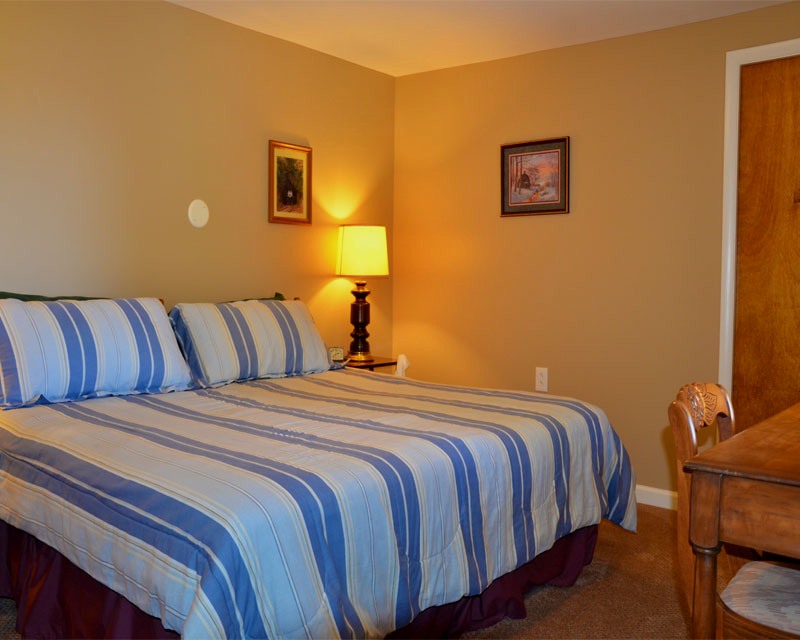
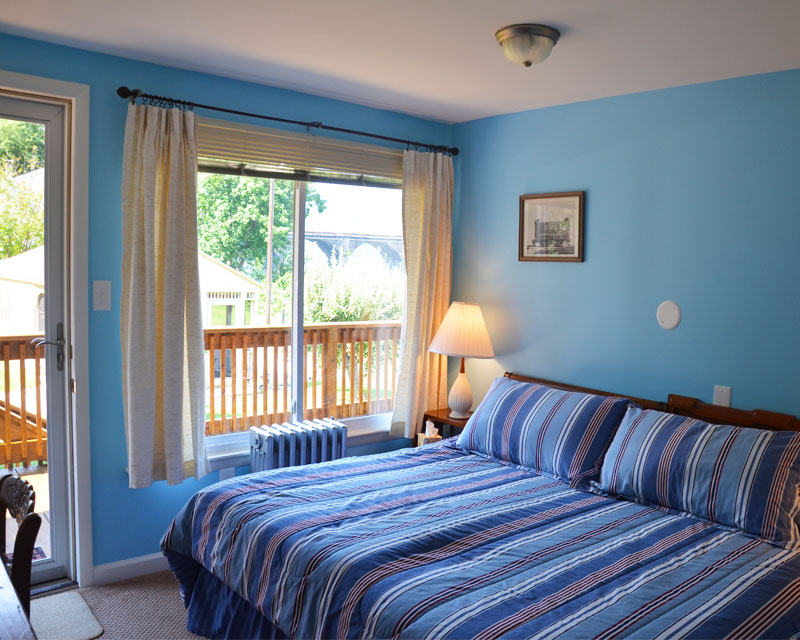
The Susquehanna Room: The Susquehanna is Bridgeview's largest suite, featuring two twin beds and a double bed in an adjoining room. This room also features a secondary sink/makeup area across from the double bed.
The Susquehanna Room
The Susquehanna Room: The Susquehanna is Bridgeview's largest suite, featuring two twin beds and a double bed in an adjoining room. This room also features a secondary sink/makeup area across from the double bed.

Susquehanna Room

The Susquehanna Room is the prime room at the Bridgeview, as it includes two conjoining rooms, one with two twin beds and one with a double bed. This room is situated on the southwest corner of the building, with a picture window to the south overlooking the picnic area, as well as a window facing west. In addition to the private bath, this room features a second sink area, ideal for freshening up. Nightstands are located with each bed, and this room includes a desk area as well.


The Susquehanna River (originally "Sasquesahanough" per the 1612 John Smith map) is a river located in central Pennsylvania, southern New York, and Maryland. At approximately 444 mi long, it is the longest river on the American east coast and the 16th longest in the United States. The river empties into the northern end of the Chesapeake Bay. The Susquehanna has always loomed large in the transportation history of the United States. Prior to the 1818 opening of the Port Deposit Bridge, the river formed a barrier between the northern and southern states, crossable only by ferry. The presence of many rapids in the river meant that while commercial traffic could navigate down the river in the spring thaws, nothing could move up. This led to the construction of two different canal systems on the lower Susquehanna; the first was the Susquehanna Canal, also called the Conowingo Canal or the Port Deposit Canal, completed in 1802; the second was the much longer and more successful Susquehanna and Tidewater Canal. As the industrial age progressed, bridges replaced ferries, and railroads replaced canals, often built right on top of the canal right of way along the river. Many canal remnants can be seen in Havre de Grace, Maryland, along US Route 15 in Pennsylvania, and in upstate New York at various locations. [Source: Wikipedia.org]